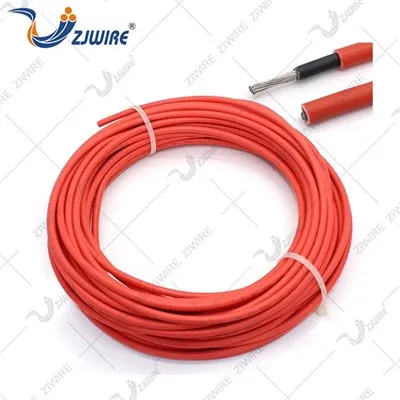
In my line of work as a solar cable supplier, one question that often comes up is whether solar cables can be used in high - altitude areas. It's a valid concern, considering the unique environmental conditions up there. So, let's dig into this topic and find out if our cables can handle the high - altitude challenge.
Understanding High - Altitude Conditions
High - altitude areas come with a set of environmental factors that are quite different from those at lower elevations. First off, there's the thin air. As you go higher, the air pressure drops. This can have an impact on how well electrical components, including solar cables, function. Lower air pressure means less insulation from the air itself, which could potentially lead to issues like corona discharge.
Corona discharge is a phenomenon where the air around a conductor ionizes, causing a faint glow and sometimes electrical losses. In high - altitude areas, the reduced air density makes it easier for this to happen. If solar cables aren't properly designed to withstand these conditions, corona discharge can lead to premature cable failure and reduced system efficiency.
Another factor is the temperature. High - altitude regions often experience extreme temperature variations. Days can be scorching hot under the intense sunlight, while nights can get freezing cold. These rapid temperature changes can put stress on the materials used in the cables. For example, the insulation and sheathing materials need to be able to expand and contract without cracking or losing their integrity.
UV radiation is also a major concern. At higher altitudes, the atmosphere is thinner, which means there's less protection from the sun's harmful UV rays. Over time, prolonged exposure to UV radiation can degrade the materials of the cables, making them brittle and more prone to damage.
Features of Our Solar Cables
Now, let's talk about the solar cables we supply. We offer a range of products that are designed to meet the demands of various environments, including high - altitude areas.
One of our popular products is the TUV PV1 - F. This cable has been specifically engineered to withstand harsh conditions. The insulation material is made to resist UV radiation. It has a special formulation that prevents it from breaking down easily when exposed to the intense sunlight found in high - altitude areas.
The PV DC Cable is another great option. It's built to handle a wide range of temperatures. We've used materials that have excellent thermal stability, so whether it's sweltering heat during the day or frigid cold at night, the cable can maintain its performance.
Our PV1 - F 1.5 and PV1 - F 6.0 cables are also designed with high - altitude use in mind. They have a robust construction that can withstand the mechanical stress caused by the thin air and temperature fluctuations. The conductors are made of high - quality materials that ensure low resistance and efficient power transmission, even in challenging conditions.
The Solar PV Cables(Twin) are a great choice for installations in high - altitude areas. The twin cable design provides extra protection and stability. It can handle the electrical load requirements of solar systems while also being resistant to the environmental factors present at high altitudes.
Testing and Certification
We don't just claim that our cables can work in high - altitude areas; we've put them through rigorous testing. Our cables undergo a series of tests to ensure they meet the necessary standards.
For UV resistance, we expose the cables to artificial UV radiation in a controlled environment. This simulates years of sunlight exposure in a short period. After the test, we check for any signs of degradation, such as cracks or changes in the material properties.
To test temperature resistance, we subject the cables to a wide range of temperatures. We start with extremely low temperatures to mimic the cold nights in high - altitude areas and then gradually increase the temperature to simulate the hot days. The cables must be able to maintain their electrical and mechanical properties throughout these temperature cycles.
We also test for corona resistance. Our testing equipment creates conditions similar to those found at high altitudes with low air pressure. This helps us determine if the cables can operate without experiencing corona discharge.
Our cables are certified to meet international standards. This certification gives our customers the confidence that the cables they're using are of high quality and can perform in challenging environments, including high - altitude areas.


Case Studies
We've had several customers who have installed our solar cables in high - altitude areas, and the results have been very positive.
One customer in a mountainous region installed our TUV PV1 - F cables in a solar power plant. After a year of operation, they reported that the cables were in excellent condition. There were no signs of UV damage, and the electrical performance had remained stable throughout the extreme temperature variations.
Another customer used our PV DC Cable in a remote high - altitude village. The solar system was designed to provide power to the local community. The cables have been working reliably, and the community has been able to enjoy a stable power supply.
Conclusion
So, can solar cable be used in high - altitude areas? The answer is a resounding yes, especially when you choose the right cables. Our range of solar cables, including the TUV PV1 - F, PV DC Cable, PV1 - F 1.5, PV1 - F 6.0, and Solar PV Cables(Twin), are designed and tested to withstand the unique challenges of high - altitude environments.
If you're planning a solar installation in a high - altitude area, don't hesitate to get in touch with us. We're here to help you choose the best cables for your project and provide you with all the support you need. Let's work together to make your solar project a success in even the most challenging locations.