

ZJWIRE: Professional Signal Transmission Wire Manufacturer
Zhejiang Zhongjing Cable Co., Ltd., established in 2000, is located in Zhejiang Province and specializes in the research, production, and sales of wires and cables. The company has grown into a well-known manufacturer by prioritizing quality and innovation. The company's products are widely used in sectors such as construction, energy, telecommunications, and infrastructure.
-
![RYS Cable]() RYS CableModels: WDZ-RYS: LSZH, flame retardant. Conductor: Stranded copper (Class 5 flexible). Insulation: LSZH polyolefin (non-PVC). Rated Voltage: 300/300V. Cross-section: 2×0.5 / 2×0.75 / 2×1.0 / 2×1.5
RYS CableModels: WDZ-RYS: LSZH, flame retardant. Conductor: Stranded copper (Class 5 flexible). Insulation: LSZH polyolefin (non-PVC). Rated Voltage: 300/300V. Cross-section: 2×0.5 / 2×0.75 / 2×1.0 / 2×1.5 -
![Feed Line]() Feed LineFeed Line is a specialized transmission line for RF signal transfer (between transmitters/receivers and antennas) or material/fluid conveyance (industrial/agricultural scenarios). Our products cover
Feed LineFeed Line is a specialized transmission line for RF signal transfer (between transmitters/receivers and antennas) or material/fluid conveyance (industrial/agricultural scenarios). Our products cover -
![SYV 50 9 RF Coaxial Cable]() SYV 50 9 RF Coaxial CableSYV 50-9 50Ω RF coaxial cable, solid PE insulation, copper braid shielding, and PVC jacket. Low attenuation, stable signal transmission for radio communication, CCTV, and high-frequency
SYV 50 9 RF Coaxial CableSYV 50-9 50Ω RF coaxial cable, solid PE insulation, copper braid shielding, and PVC jacket. Low attenuation, stable signal transmission for radio communication, CCTV, and high-frequency -
![LIHCH Cable]() LIHCH CableLIHCH Cable is a premium multi - core halogen - free screened control cable specifically engineered for reliable data and signal transmission in scenarios demanding high electromagnetic compatibility
LIHCH CableLIHCH Cable is a premium multi - core halogen - free screened control cable specifically engineered for reliable data and signal transmission in scenarios demanding high electromagnetic compatibility -
![LIYY Cable]() LIYY CableLIYY cable is a lightweight, flexible control cable designed for signal transmission and low-voltage control systems. With fine-stranded copper conductors and high-quality PVC insulation, LIYY cable
LIYY CableLIYY cable is a lightweight, flexible control cable designed for signal transmission and low-voltage control systems. With fine-stranded copper conductors and high-quality PVC insulation, LIYY cable -
![Computer Network Cable]() Computer Network CableThe Computer Network Cable is designed to provide reliable, high-speed data transmission for home, office, and industrial networks. Engineered with high-quality materials, it ensures minimal signal
Computer Network CableThe Computer Network Cable is designed to provide reliable, high-speed data transmission for home, office, and industrial networks. Engineered with high-quality materials, it ensures minimal signal -
![JS-TRVVP Cable]() JS-TRVVP CableJS-TRVVP Cable: High-Shielding Twisted Pair Flexible Cable for Industrial Applications. The JS-TRVVP cable is a premium-grade flexible signal transmission cable designed for demanding industrial
JS-TRVVP CableJS-TRVVP Cable: High-Shielding Twisted Pair Flexible Cable for Industrial Applications. The JS-TRVVP cable is a premium-grade flexible signal transmission cable designed for demanding industrial -
![Telephone Drop Wire]() Telephone Drop WireTelephone drop wire (also known as "drop cable" or "service drop wire") is a specialized segment of telephone cabling designed for the "last-mile" connection-linking the
Telephone Drop WireTelephone drop wire (also known as "drop cable" or "service drop wire") is a specialized segment of telephone cabling designed for the "last-mile" connection-linking the -
![Telephone Cables]() Telephone CablesTelephone cables are specialized transmission media made for low-speed data transfer, analog or digital voice transmissions, and simple telecommunications connections. As they balance signal
Telephone CablesTelephone cables are specialized transmission media made for low-speed data transfer, analog or digital voice transmissions, and simple telecommunications connections. As they balance signal -
![Coaxial Cable]() Coaxial CableCoaxial cable, sometimes just called "coax," is a specific kind of electrical cable made for the effective, low-loss transfer of high-frequency communications, including data, video, and
Coaxial CableCoaxial cable, sometimes just called "coax," is a specific kind of electrical cable made for the effective, low-loss transfer of high-frequency communications, including data, video, and -
![Signal Wire]() Signal WireZhejiang Zhongjing Wire & Cable Co., Ltd offers premium Signal Wire and Signal Cable with excellent durability and conductivity. Customizable options available for industrial and commercial
Signal WireZhejiang Zhongjing Wire & Cable Co., Ltd offers premium Signal Wire and Signal Cable with excellent durability and conductivity. Customizable options available for industrial and commercial -
![Tracer Wire]() Tracer WireExplore premium Tracer Wire and Tracer Cable from Zhejiang Zhongjing Wire & Cable Co., Ltd. Durable copper core PVC insulated underground wire, perfect for marking pipelines, utilities, and telecom
Tracer WireExplore premium Tracer Wire and Tracer Cable from Zhejiang Zhongjing Wire & Cable Co., Ltd. Durable copper core PVC insulated underground wire, perfect for marking pipelines, utilities, and telecom


Why Choose Us
Extensive Experience
With over two decades of experience, Zhongjing Cable has grown into a trusted and well-known manufacturer by consistently prioritizing quality, innovation, and customer satisfaction.
Technology Certification
The company has obtained ISO 9001 Quality Management System certification and CCC National Compulsory Product Certification, ensuring high-quality standards and product safety.
OEM/ODM Service
We offer professional OEM/ODM services, producing high-quality cable products according to your brand and design requirements. Whether it’s conductor specifications, insulation materials, or color coding, we strictly follow the standards provided by our clients to ensure products perfectly match their brand.
Global Market
Zhejiang Zhongjing Cable Co., Ltd. has successfully expanded its product sales to various international markets, including Italy, Spain, the Philippines, Burundi, Tanzania, and Brazil, as well as regions in the Middle East, Southeast Asia, South America, Africa, and select European countries.

Signal Wire
Signal wire is an essential component for transmitting low-voltage electrical signals, data, and control commands in industrial, commercial, and residential systems.
Tracer Wire
Our tracer wire features excellent conductivity, durability, and corrosion resistance, ensuring precise detection for buried pipelines, communication cables, and underground utilities.
Fire Alarm Wire
Fire alarm wire is a specialized communication and control cable designed for fire detection and alarm systems.
Exploding Wires
Exploding wires are specialized high-energy discharge conductors designed for scientific research, defense applications, and precision triggering systems.
Drag Chain Wires
These cables are engineered to withstand repetitive bending, torsion, and high mechanical stress while maintaining reliable electrical performance.
Product Specifications
|
Signal Wire |
Reliable Data & Signal Transmission Solution |
|
Manufacturer |
Zhejiang Zhongjing Wire & Cable Co., Ltd |
|
Conductor |
Oxygen-Free Copper (OFC) – High conductivity for minimal signal loss. Silver-Plated Copper – Enhanced high-frequency performance (RF/audio) |
|
Insulation layer |
PVC – Standard, cost-effective. PTFE (Teflon) – High-temperature resistance (up to 200°C). PE (Polyethylene) – Low capacitance (critical for analog signals). |
|
Inner layer |
Copper |
|
Outer layer |
PVC (Cost-effective, flexible) TPE (Elastic, wear-resistant) LSZH (Low smoke, flame-retardant for public/industrial use). |
Advantages of Signal Transmission Wire
Quickly and Accurate Transmission
One of the main advantages of signal transmission wires is their ability to transmit information quickly and accurately. The wires are designed to have low resistance, which allows for the transmission of large volumes of data without any loss or distortion.
Unmatched Reliability
Signal transmission wires also offer unparalleled reliability, ensuring that the data being transmitted is not subject to interference or disruption. This is due to the use of shielding materials that help protect the wires from electromagnetic interference, which can otherwise disturb the signal and lead to data loss.
Compatibility
Another major advantage of using signal transmission wires is their compatibility with a wide range of electronic devices. The wires are designed to be used with a variety of connectors, allowing them to connect to different devices effectively.
Easy to Install
Signal transmission wires are relatively easy to install and maintain, making them an excellent choice for both amateur and professional users. They are typically durable and long-lasting, reducing the frequency of replacement or maintenance.
Difference Power Wires and Signal Wires
Difference in Function:
Signal wires are primarily used to carry low-level electronic signals or data. They are the backbone of telecommunications. Long distance transmission of video and data is realized. In contrast, power wires are designed to conduct electricity and are an essential link in providing power to equipment, machinery and the entire electrical system.
Different connection methods:
Signal wires connect equipment in a way that transmits data or signals. On the other hand, power wires are used to connect equipment or devices to the power grid to provide the necessary power to run tools, appliances and infrastructure.
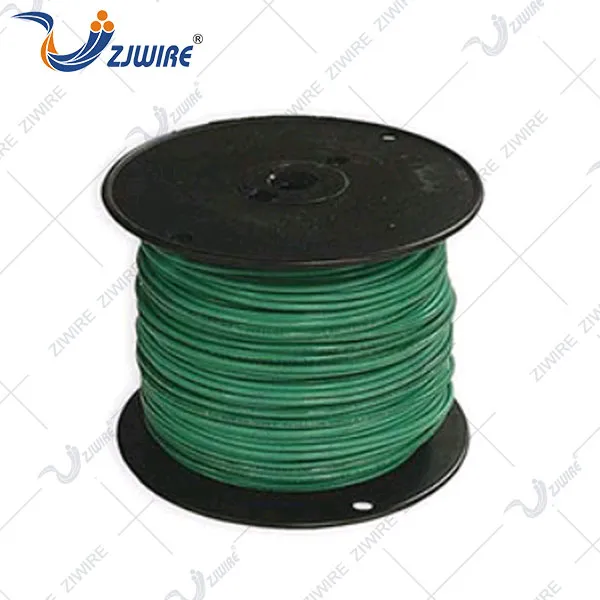
Application of Signal Transmission Wire
Industrial Automation Control System
In modern industrial automation, signal transmission wire plays a vital role. It is used to connect devices such as sensors, actuators and controllers to transmit control signals, feedback signals and monitoring data.
Communication and network equipment
Signal transmission wires are often used in communication and network equipment to support high-speed and low-latency data transmission. For example, security monitoring, network communication, etc.
Medical equipment
In medical equipment, signal transmission wire is used to connect complex diagnostic and treatment equipment, such as CT scanners and magnetic resonance imaging (MRI), electrocardiographs (ECG), etc.
Aerospace and Defense
In the aerospace and military fields, signal transmission wire is used in complex electronic systems such as flight control and navigation systems.
Building Automation and Smart Home
With the popularization of smart home and building automation, signal transmission wires are used in smart lighting, building security and other fields.
Audio and Video Equipment
In professional audio and video systems, signal transmission wire is used to transmit high-fidelity signals, such as broadcasting and recording studio equipment, home theater systems, etc.
Power Monitoring and Energy Management
In the field of energy and power management, signal transmission wire is used to transmit monitoring signals and instructions to improve the efficiency of equipment operation, such as solar and wind power equipment.
Wires should be routed in dedicated cable trays, conduits, or ducts to avoid interference and mechanical damage.
Signal wires must be kept at a safe distance from high-voltage or power cables to reduce electromagnetic interference.
The minimum bending radius specified by the manufacturer must be observed to prevent wire damage and signal loss.
Cables should be fixed firmly at intervals to avoid sagging, vibration, or accidental disconnection.
After installation, continuity, insulation resistance, and signal transmission quality must be tested and documented before commissioning.
Product Quality Process
Zhejiang Zhongjing Cable applies rigorous quality management throughout production:
Raw material inspection (copper purity, silicone compound verification).
In-process monitoring (conductor continuity, extrusion thickness control).
Electrical tests (insulation resistance, DC high-pot where required).
Thermal & aging tests to validate long-term performance at elevated temperatures.
Final inspection and batch traceability - each order is issued with a QC report and can include certificates of compliance on request.
Visual Inspection: Inspect all wires, terminals, and connectors for visible defects such as cuts, abrasions, discoloration, or insulation damage.
Contact Us: Reach out via our website, email, or phone to schedule your initial consultation.
Submit Order Details: Provide quantities, jacket colors, printing, and cable length, and we’ll send you an official quote.
Invoice Payment: Make payment based on the proforma invoice to kickstart the production.
Production Sample Creation: Review pictures or request samples to confirm before bulk production starts.
Production Process: We update you with photos and videos of the completed products, along with shipping cost details.
Shipping and Balance Payment: Once the balance is received, your bulk order is shipped to your chosen location.
Packaging and Shipping
|
Shipping Options: |
FOB, CFR/CIF, DDP on request - contact us for the best shipping solution and transit estimates to your port. |
|
Packaging: |
The neatly packed coils are wound on plastic or wooden reels, protected with moisture-proof film and mounted on export pallets or cardboard reels as required. For high-volume orders we prepare sea-worthy wooden drums and palletized crates. |
|
Lead Time: |
Typical stock orders ship within 3–7 working days; customized builds (color, braid, special gauges) generally require 10–20 working days depending on quantity. |
|
Warranty: |
1-Year warranty against manufacturing defects (terms outlined in our sales agreement). |
Certificate Of Honor


FAQ
As one of the most professional signal transmission wire manufacturers and suppliers in China, we're featured by quality products and good price. Please rest assured to buy signal transmission wire for sale here and get pricelist from our factory. Contact us for customized service.
Exploding Wires, Fire Alarm Cable, Drag Chain CablePopular Products


