


Hey there! As a supplier of plastic insulated copper wire, I often get asked all sorts of questions about our products. One question that pops up quite a bit is, "Is plastic insulated copper wire resistant to alkalis?" Well, let's dive right into this topic and find out.
First off, let's understand what plastic insulated copper wire is. It's basically copper wire covered with a layer of plastic insulation. The copper part is the conductor that carries the electrical current, while the plastic insulation serves to protect the copper and prevent electrical leakage. This type of wire is used in a wide range of applications, from household electrical wiring to industrial machinery.

Now, let's talk about alkalis. Alkalis are substances that have a high pH level, usually greater than 7. They can be found in many places, like cleaning products, some industrial chemicals, and even in natural environments in certain cases. When it comes to the resistance of plastic insulated copper wire to alkalis, it depends on a few factors.
The type of plastic insulation plays a huge role. Different plastics have different chemical properties and levels of resistance to alkalis. For example, some common types of plastic used for insulation are PVC (Polyvinyl Chloride), PE (Polyethylene), and Teflon. PVC is a widely used insulation material because it's relatively cheap and has decent electrical insulation properties. However, its resistance to alkalis is somewhat limited. In the presence of strong alkalis over a long period, PVC can start to break down. The alkali can react with the chlorine in the PVC, causing the plastic to become brittle and lose its insulating properties.
On the other hand, PE is generally more resistant to alkalis compared to PVC. It has a more stable chemical structure and is less likely to react with alkalis. Teflon, which is known for its excellent chemical resistance, is highly resistant to alkalis. It can withstand exposure to strong alkalis without significant degradation.
Another factor is the concentration and temperature of the alkali. Even if the plastic insulation is relatively resistant to alkalis, a very high - concentration alkali solution can still pose a threat. And when the temperature is elevated, chemical reactions tend to occur more quickly. So, if the plastic insulated copper wire is exposed to a hot, high - concentration alkali solution, the risk of damage to the insulation is much higher.
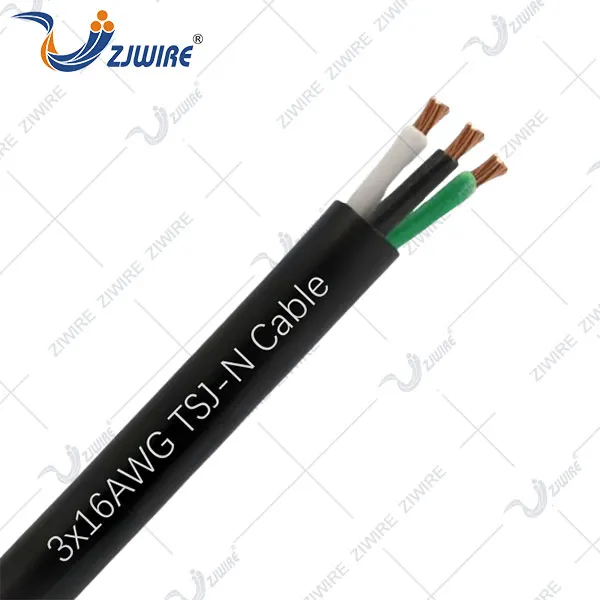
Let's take a look at some of the products we offer. We have the TSJ Cable. This cable uses a special type of plastic insulation that provides good protection against various environmental factors, including a certain degree of alkali resistance. The insulation is designed to maintain its integrity in normal operating conditions, even if it comes into contact with mild alkalis.
Our SPT - 2 wire is commonly used in household appliances. The plastic insulation on this wire is engineered to be durable and resistant to everyday wear and tear. While it may not be suitable for direct immersion in strong alkali solutions, it can handle minor exposure to mild alkalis without immediate damage.
The UL3302 Cable is a high - performance cable with advanced insulation technology. This cable is designed for more demanding applications, and its insulation has been tested to have a relatively high level of alkali resistance. It can be used in industrial settings where there might be a risk of exposure to alkalis.
If you're in an environment where your plastic insulated copper wire might come into contact with alkalis, there are a few things you can do to protect it. First, try to minimize the exposure. If possible, keep the wire away from areas where alkalis are present. You can also use additional protective measures, like enclosing the wire in a protective conduit made of a material that is highly resistant to alkalis.
Regular inspection is also crucial. Check the insulation for any signs of damage, such as cracking, discoloration, or softening. If you notice any of these signs, it's important to replace the wire as soon as possible to avoid electrical hazards.
In conclusion, whether plastic insulated copper wire is resistant to alkalis depends on the type of plastic insulation, the concentration and temperature of the alkali, and the duration of exposure. At our company, we offer a variety of plastic insulated copper wires with different levels of alkali resistance to meet your specific needs.
If you're interested in purchasing our plastic insulated copper wire or have any questions about alkali resistance or other aspects of our products, don't hesitate to reach out. We're here to help you find the right solution for your electrical wiring needs.
References
- "Handbook of Electrical and Electronic Insulating Materials"
- "Polymer Chemistry: An Introduction"
- Industry standards and research on plastic insulation materials for electrical wires


