


As a supplier of plastic insulated copper wire, I am frequently asked about the cross - sectional area of this essential product. Understanding the cross - sectional area is not only crucial for technical applications but also for making informed purchasing decisions.
The Significance of Cross - Sectional Area
The cross - sectional area of a plastic insulated copper wire refers to the area of the copper conductor within the wire, measured perpendicular to the direction of the wire's length. This dimension is vital as it directly impacts two key electrical properties: resistance and current - carrying capacity.
Resistance is inversely proportional to the cross - sectional area of the wire. According to Ohm's law and the formula for resistance (R=\rho\frac{l}{A}), where (R) is the resistance, (\rho) is the resistivity of copper (a constant value), (l) is the length of the wire, and (A) is the cross - sectional area. A larger cross - sectional area means lower resistance. Lower resistance is beneficial because it reduces power loss in the form of heat during the transmission of electrical current. For instance, in high - voltage power transmission lines, large - cross - section copper wires are used to minimize energy waste over long distances.
The current - carrying capacity, or ampacity, of a wire is directly related to its cross - sectional area. A wire with a larger cross - sectional area can carry more current without overheating. This is because a larger area provides more space for electrons to flow, reducing the density of the current and thus the heat generated. In electrical systems, it is essential to select a wire with an appropriate cross - sectional area to ensure safe and efficient operation. For example, in a household electrical circuit, the wiring for high - power appliances like electric stoves or air conditioners must have a larger cross - sectional area compared to the wiring for low - power devices such as lamps.
Measuring Cross - Sectional Area
There are several ways to measure the cross - sectional area of plastic insulated copper wire. One common method is to use calipers to measure the diameter of the copper conductor. For a circular cross - section (which is the most common shape for copper wires), the cross - sectional area (A) can be calculated using the formula (A = \pi(\frac{d}{2})^2), where (d) is the diameter of the copper wire.
Another approach is to refer to wire gauge standards. In the United States, the American Wire Gauge (AWG) system is widely used. The AWG number is inversely related to the cross - sectional area of the wire. That is, a lower AWG number indicates a larger cross - sectional area. For example, a 2 AWG wire has a much larger cross - sectional area than a 12 AWG wire. This system simplifies the selection of wires for different applications, as it provides a standardized way to specify wire size.
Applications and Cross - Sectional Area Requirements
Different applications have different requirements for the cross - sectional area of plastic insulated copper wire.
In residential electrical wiring, the most common wire sizes range from 14 AWG to 6 AWG. 14 AWG wire is typically used for lighting circuits and other low - current applications, as it can safely carry up to 15 amps of current. 12 AWG wire, with a larger cross - sectional area, is used for general outlets and can handle up to 20 amps. For high - power appliances like electric dryers or water heaters, 10 AWG or even 6 AWG wire may be required.
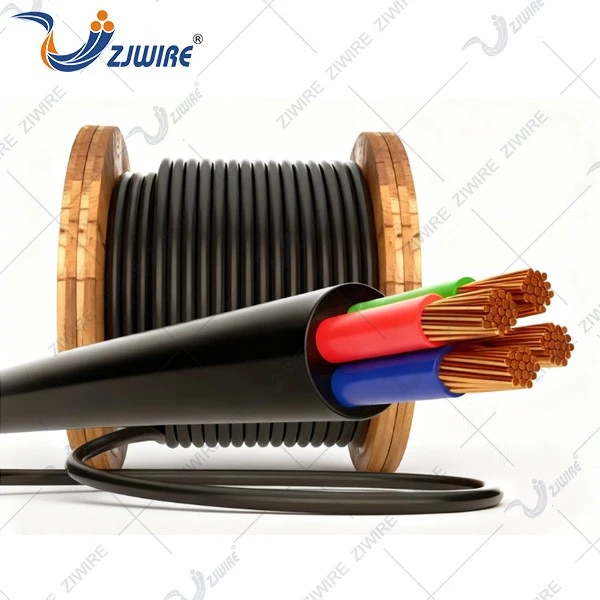

In industrial settings, where large amounts of power are needed, much larger cross - sectional area wires are used. For example, in a manufacturing plant, wires with cross - sectional areas of several square inches may be used to supply power to large motors and machinery.
In the field of electronics, smaller cross - sectional area wires are often used. For example, in printed circuit boards (PCBs), fine copper traces act as wires, and their cross - sectional areas are extremely small, measured in square millimeters or even smaller units.
Our Product Range and Cross - Sectional Area Options
As a supplier of plastic insulated copper wire, we offer a wide range of products with various cross - sectional areas to meet the diverse needs of our customers.
Our Multi‑Core PVC Equipment Control Cable is available in multiple core configurations and a variety of cross - sectional areas. These cables are suitable for industrial equipment control applications, where reliable signal transmission is crucial. Depending on the specific requirements of the equipment, customers can choose the appropriate cross - sectional area to ensure proper functioning.
Our Cross‑Linked PVC Electronic Wire is designed for electronic devices. It comes in small cross - sectional areas, which are ideal for soldering to PCBs and other electronic components. The high - quality insulation of this wire provides excellent electrical performance and durability.
For applications that require flexibility, our Extra‑Flexible AWM Hook‑up Wire is a great choice. Available in different cross - sectional areas, this wire can withstand repeated bending and flexing without breaking. It is commonly used in consumer electronics, automotive electronics, and other applications that demand flexibility.
Our Oil‑Resistant Flexible Portable Cable is suitable for outdoor and industrial environments where there is a risk of oil exposure. With various cross - sectional area options, it can be used for powering portable equipment such as generators and tools.
In the renewable energy sector, our UV‑Resistant Photovoltaic Single Conductor Wire is designed to withstand the harsh conditions of solar power systems. It is available in different cross - sectional areas to meet the power requirements of different photovoltaic installations.
Making the Right Choice
When choosing the cross - sectional area of plastic insulated copper wire, it is important to consider several factors. First, determine the current requirements of the application. Calculate the maximum current that the wire will need to carry, and then select a wire with a cross - sectional area that can safely handle that current.
Next, consider the length of the wire. Longer wires have higher resistance, so a larger cross - sectional area may be needed to compensate for the increased resistance and prevent excessive power loss.
Finally, take into account the environment in which the wire will be used. If the wire will be exposed to heat, moisture, chemicals, or other harsh conditions, choose a wire with appropriate insulation and a cross - sectional area that can withstand those conditions.
Contact Us for Your Purchasing Needs
If you are in the market for plastic insulated copper wire and need assistance in selecting the right cross - sectional area for your specific application, please do not hesitate to contact us. Our team of experts is ready to provide you with professional advice and high - quality products. We are committed to helping you find the best solutions for your electrical needs.


