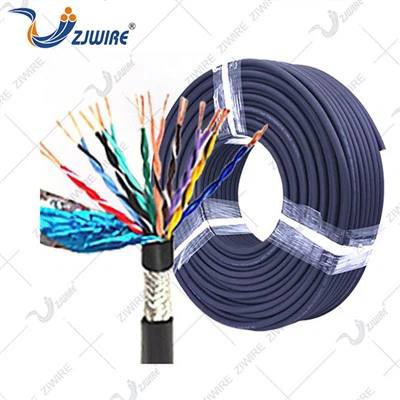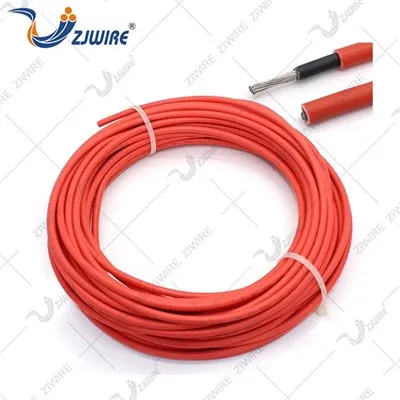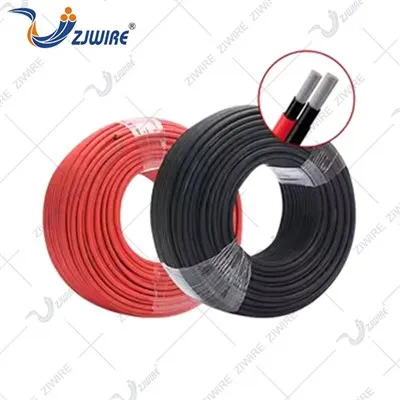
When it comes to signal transmission wires, one crucial factor that significantly impacts performance is the wire's thickness. As a seasoned signal transmission wire supplier, I've witnessed firsthand how the right wire thickness can make or break a system's efficiency. In this blog, we'll explore the optimal thickness for signal transmission wires in different applications.
Understanding Wire Thickness and Its Significance
Wire thickness is typically measured in terms of gauge. In the American Wire Gauge (AWG) system, a smaller gauge number indicates a thicker wire. For instance, a 10 AWG wire is thicker than a 20 AWG wire. The thickness of a wire affects several key electrical properties, including resistance, current - carrying capacity, and signal attenuation.

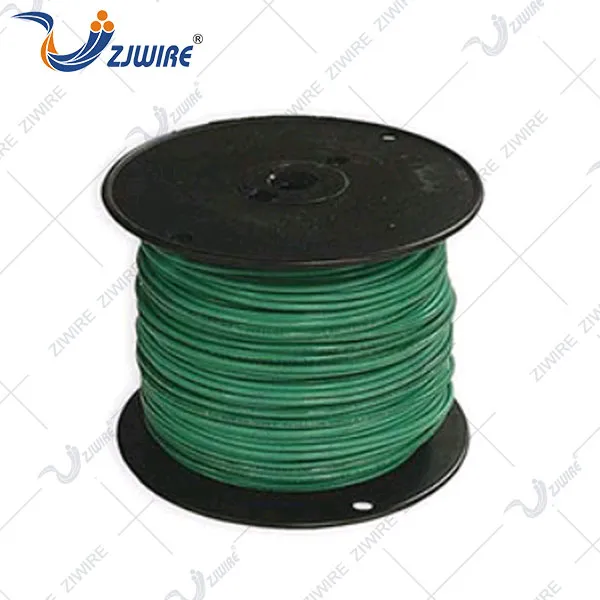
Resistance is inversely proportional to the cross - sectional area of the wire. A thicker wire has a larger cross - sectional area and thus lower resistance. Lower resistance means less power loss in the form of heat when current flows through the wire. This is particularly important in applications where high currents are involved.
Current - carrying capacity is also related to wire thickness. Thicker wires can handle more current without overheating. If a wire is too thin for the amount of current it needs to carry, it can overheat, leading to insulation damage, reduced lifespan, and even fire hazards.
Signal attenuation, which is the loss of signal strength as it travels through the wire, is another critical consideration. A thicker wire generally has lower attenuation, which is essential for maintaining signal integrity, especially over long distances.
Optimal Thickness for Power Transmission
In power transmission applications, the primary concern is often current - carrying capacity. Electrical power is transmitted from power plants to substations and then to end - users via a network of power lines. For high - voltage transmission lines, thick wires are used to minimize power loss.
Large - scale power transmission lines typically use wires with relatively low gauge numbers, often in the range of several hundred MCM (thousand circular mils). These thick wires can carry large amounts of current over long distances with minimal resistance and power loss. For example, in a high - voltage direct - current (HVDC) transmission system, thick cables are used to transmit power across continents.
On a smaller scale, in residential and commercial electrical wiring, the wire gauge is selected based on the expected load. For general lighting circuits in a home, 14 AWG wires are commonly used as they can safely carry up to 15 amps of current. For outlets that may power larger appliances, 12 AWG wires are used, which can handle up to 20 amps.
Optimal Thickness for Audio and Video Signal Transmission
In audio and video signal transmission, signal integrity is of utmost importance. Audio and video signals are often in the form of high - frequency analog or digital signals. These signals are more susceptible to attenuation and interference.
For audio applications, such as in home audio systems or professional recording studios, the choice of wire thickness depends on the length of the cable and the power requirements. For short runs of speaker cables, 16 AWG or 18 AWG wires are usually sufficient. However, for longer runs or high - power speakers, thicker wires like 12 AWG or 14 AWG may be required to reduce signal loss and ensure accurate sound reproduction.
In video transmission, especially for high - definition (HD) and ultra - high - definition (UHD) signals, the wire thickness also plays a vital role. Coaxial cables, which are commonly used for video transmission, have different thicknesses depending on the application. For example, RG - 6 coaxial cable, which is a popular choice for cable TV and satellite TV, has a specific thickness that helps maintain the impedance and minimize signal loss. Thicker coaxial cables may be used for longer runs or for transmitting higher - frequency signals. You can learn more about specialized wires for audio - visual applications on our Exploding Wires page.
Optimal Thickness for Data Transmission
Data transmission, whether it's in a local area network (LAN), a wide area network (WAN), or a data center, requires high - speed and reliable signal transfer. Ethernet cables are the most common type of cables used for data transmission.
Ethernet cables come in different categories, such as Cat5e, Cat6, and Cat6a. Each category has specific requirements for wire thickness and construction to support different data transfer rates and distances. For example, Cat6 cables typically have thicker conductors compared to Cat5e cables. The thicker wires in Cat6 cables help reduce crosstalk and attenuation, allowing for faster data transmission over longer distances, up to 10 Gigabits per second (Gbps) over 100 meters.
In fiber optic data transmission, the concept of wire thickness is a bit different. Instead of a traditional metal wire, fiber optic cables use thin strands of glass or plastic to transmit light signals. The core diameter of the fiber optic cable is a critical factor. Single - mode fibers, which are used for long - distance and high - speed data transmission, have a very small core diameter (usually around 9 microns). Multi - mode fibers, used for shorter distances, have a larger core diameter (e.g., 50 or 62.5 microns).
Optimal Thickness for Automotive and Aerospace Applications
In automotive and aerospace applications, signal transmission wires need to meet strict requirements for reliability, durability, and weight. In cars, wires are used for various functions, including power distribution, sensor data transmission, and communication between different electronic control units (ECUs).
For power distribution in a car, the wire gauge is selected based on the current requirements of the electrical components. For example, the battery cables are relatively thick to handle the high current required to start the engine. On the other hand, wires used for sensor data transmission, such as those for the oxygen sensor or the temperature sensor, can be thinner as they carry low - current signals.
In aerospace applications, weight is a critical factor. Wires need to be as thin as possible while still meeting the electrical performance requirements. Specialized lightweight wires with high - strength insulation materials are used. These wires are designed to withstand extreme temperatures, vibrations, and electromagnetic interference. You can find out more about wires suitable for these challenging environments on our Tracer Wire page.
Specialized Wires: The Case of LIYY Cable
One type of specialized signal transmission wire is the LIYY cable. LIYY cables are known for their excellent electrical properties and flexibility. They are often used in applications where space is limited, and a high - degree of flexibility is required.
The optimal thickness of LIYY cables depends on the specific application. For low - power and short - range applications, thinner LIYY cables can be used. However, for applications that require higher power transmission or longer distances, thicker LIYY cables are necessary. You can explore more details about LIYY cables on our LIYY Cable page.
Conclusion
In conclusion, the optimal thickness for a signal transmission wire varies greatly depending on the application. Whether it's power transmission, audio and video signal transmission, data transfer, or use in automotive and aerospace settings, choosing the right wire thickness is essential for ensuring optimal performance, reliability, and safety.
As a signal transmission wire supplier, we understand the importance of these factors and are committed to providing our customers with the highest - quality wires in the right thickness for their specific needs. If you're looking for a reliable partner for your signal transmission wire requirements, we invite you to contact us to discuss your project. Our team of experts is ready to assist you in selecting the most suitable wire thickness and type for your application.
References
- Grob, Bernard. "Basic Electronics." McGraw - Hill Education, 2007.
- Neaman, Donald A. "Microelectronics: Circuit Analysis and Design." McGraw - Hill Education, 2019.
- Andrews, Jeff. "Data Communication and Networking." Cengage Learning, 2018.