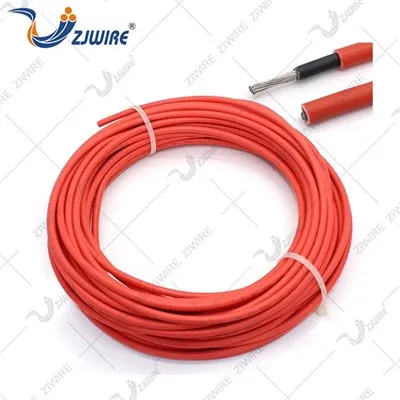
What is the cross - sectional area of flexible cable PVC insulated cable?
As a supplier of Flexible cable PVC insulated cable, I often receive inquiries about the cross - sectional area of these cables. Understanding the cross - sectional area is crucial as it directly impacts the cable's performance and suitability for different applications.
The cross - sectional area of a cable refers to the area of the circular cross - section of the conductor within the cable. It is typically measured in square millimeters (mm²). This area is a key factor in determining the current - carrying capacity of the cable. A larger cross - sectional area generally allows the cable to carry more current without overheating.
Let's take a closer look at how the cross - sectional area affects the cable's performance. When an electric current flows through a cable, it encounters resistance. According to Ohm's law (V = IR, where V is voltage, I is current, and R is resistance), the resistance of a conductor is inversely proportional to its cross - sectional area. That is, as the cross - sectional area increases, the resistance decreases. Lower resistance means less power is dissipated as heat, which is important for the efficient operation of the cable and the safety of the electrical system.
For example, in a low - power application such as a small household appliance, a cable with a relatively small cross - sectional area may be sufficient. However, for high - power applications like industrial machinery or large electrical installations, a cable with a larger cross - sectional area is required to handle the higher current without causing excessive heat buildup.
Now, let's consider some common types of flexible PVC insulated cables and their typical cross - sectional areas. The H05VV - F is a popular European standard cable. It is often used in general - purpose electrical applications. The cross - sectional area of H05VV - F cables can range from 0.5 mm² to 6 mm². The smaller cross - sectional areas are suitable for low - power devices, while the larger ones can handle higher currents.
Another well - known cable is the H07VV - F. This cable is designed for more demanding applications, such as those in industrial environments. The cross - sectional area of H07VV - F cables usually starts from 1.5 mm² and can go up to larger values, depending on the specific requirements. The larger cross - sectional areas ensure that the cable can carry the high currents typically associated with industrial machinery.
The H05RR - F Cable is also a flexible PVC insulated cable. It is often used in portable electrical equipment. The cross - sectional area of H05RR - F cables can vary, with common sizes being 0.75 mm², 1.0 mm², and 1.5 mm². These sizes are appropriate for applications where the current requirements are not extremely high but flexibility is important.


When choosing a flexible PVC insulated cable, it is essential to select the right cross - sectional area based on the specific application. Several factors need to be considered, including the expected current load, the length of the cable, and the ambient temperature.
The expected current load is perhaps the most important factor. You need to know the maximum current that will flow through the cable during normal operation. This can be determined by looking at the power ratings of the connected devices. For example, if you have a device with a power rating of 1000 watts and it operates at a voltage of 230 volts, you can use the formula P = VI (where P is power, V is voltage, and I is current) to calculate the current. In this case, I = P/V = 1000/230 ≈ 4.35 amps. Based on this current value, you can select a cable with an appropriate cross - sectional area that can safely carry this current.
The length of the cable also affects the choice of cross - sectional area. As the length of the cable increases, the resistance of the cable also increases. This means that for longer cables, a larger cross - sectional area may be required to keep the voltage drop within acceptable limits. A significant voltage drop can cause problems such as reduced performance of the connected devices or even damage to the equipment.
The ambient temperature is another factor to consider. High ambient temperatures can reduce the current - carrying capacity of the cable. In hot environments, the cable may heat up more easily, and a larger cross - sectional area may be needed to ensure that the cable can handle the current without overheating.
As a supplier of flexible PVC insulated cables, we have a wide range of products with different cross - sectional areas to meet the diverse needs of our customers. Our team of experts can help you select the most suitable cable for your specific application. We understand the importance of choosing the right cross - sectional area to ensure the safe and efficient operation of your electrical systems.
If you are in the process of purchasing flexible PVC insulated cables, we encourage you to contact us for a detailed discussion. We can provide you with technical advice, product specifications, and competitive pricing. Whether you need a cable for a small household project or a large industrial installation, we have the solutions to meet your requirements.