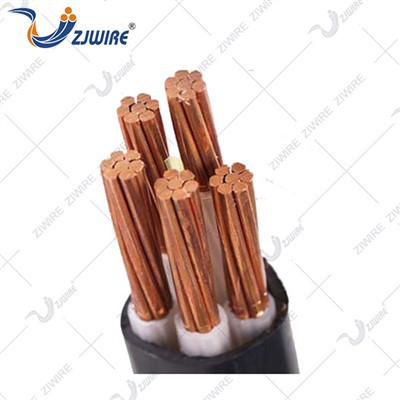
Hey everyone, thanks for stopping by! I'm Luke, and I've been working in the flexible PVC insulated cable game for almost a decade now-first on the production floor, then as a sales rep, so I get way too many questions about durability, flex life, and what actually makes these cables stand up to repeated bending. One question I get all the time is: "What's the flexural endurance of a flexible cable PVC insulated cable?"
Let's cut to the chase-this isn't a one-number answer. It depends on way more than just "it's flexible." If you've ever seen a lamp cord that frayed right at the plug, or a machine tool cable that went dead after a month of being looped around rollers, you know exactly what I'm talking about. Flexural endurance is basically how many times you can bend a cable (under specific conditions) before it breaks-whether that's a conductor snapping, insulation cracking, or both. For our customers, that's not just a technical spec; it's how long their wiring lasts, how much downtime they avoid, and how much money they don't waste replacing stuff.
First, let's break down what parts of a flexible PVC cable actually affect flex endurance. The conductor is the big one-no surprise there. If it's solid wire, that's H05V-U Class 1 solid conductor (I can link that right here: H05V-U Class 1 solid conductor). Solid wire is cheap, but it hates bending-bend it a few times and it cracks, then breaks. That's why you never see solid wire in a vacuum cleaner cord or a robot arm, right? Then there's fine-stranded wire, which is split into classes. Class 5 is super fine, tiny strands twisted together, and that's where the magic happens. We have H07V-K Fine-stranded flexible conductor (Class 5) for that exact use. The more strands, the smaller each one is, so they can slide past each other when you bend the cable instead of snapping. That's a huge flex life boost.
Next up is the PVC insulation. Not all PVC is created equal, especially for flexible cables. Regular PVC is stiff, brittle-bend it repeatedly and it cracks like old plastic. The good stuff for flexible cables is plasticized PVC, right? We add plasticizers to make it soft and stretchy, not hard. But here's the catch: too much plasticizer and it gets greasy, wears out faster; too little and it's stiff. The balance is everything, and that's where our in-house compounding team earns their keep. We also do cross-linking on some of our jackets, which makes the PVC more resistant to heat and oil-great for factory floors.
Now, let's talk about actual numbers, because that's what most folks want. Test standards matter here, so I'm not just pulling these out of thin air. The common test is the ISO 6722 or IEC 60227 flex test-you bend the cable through a fixed radius, over a pulley, a set number of times, and count how many cycles until it fails. For reference, let's go through our standard products because that's what most of our customers use daily.
First, H05V-U Class 1 solid conductor (the non-flexible solid wire) tops out at like 100 to 200 flex cycles. That's only good for stuff that never moves-like building wiring that's run once and never bent again. If you try to bend that around a desk leg, it's done for in a few months.
Then we get to Class 5 fine-stranded, which is where most flexible applications live. H07V-K Fine-stranded flexible conductor (Class 5) has a flex endurance range of around 10,000 to 20,000 cycles when tested at a small bend radius (like 5x the cable diameter). That's perfect for things like control panels, sensor wires, or things that move occasionally but not super fast.
But wait, what about stuff that moves a lot-like robot cables, conveyor belts, or power tools that get tossed around? That's where we go higher. H03VV-F and H07VVH2-F are our go-tos for super flexible applications. Let's check those: H07VVH2-F is a heavy-duty flexible cable, usually used for trailing cables (the ones that move back and forth on cranes or conveyors). Its flex endurance is usually between 50,000 and 100,000 cycles when tested at a tight bend radius (like 3x the cable diameter). H03VV-F is a thinner, lighter option for things like lamp cords, small appliance wiring, or low-movement power tools-its flex life is around 20,000 to 50,000 cycles, which is more than enough for those uses.
And don't forget NH RVV Cable, which is our multi-core flexible power cable for general use, like extension cords or building wiring that might need occasional moving. That one usually hits 15,000 to 30,000 cycles, depending on the size and insulation grade. All those links I mentioned earlier-those take you straight to our spec pages where you can see exact test numbers for each product, not just the rough ranges I'm tossing out here.
Wait, I should mention that the test conditions matter a ton. If you bend a cable at a larger radius, like 10x its diameter, you'll get way more cycles-like double or triple. Bend it at a tighter radius, say 2x, and it's half that. Also, temperature plays a role: if the cable's in a hot environment (like a factory near a furnace), the plasticizer in the PVC breaks down faster, so flex life drops. If it's super cold, PVC gets brittle, same issue. Oh, and if there's oil or chemicals around, that eats at the insulation, so flex endurance goes way down too. Those are all real-world factors that don't show up in a lab test, but they make a huge difference.
Let me give you a real example to make this concrete. Last year, we had a customer who made small woodworking tools. They were using a generic lamp cord (which is like a basic H03VV-F knockoff) for their router power cables, and the wires were failing every 2 weeks because people were yanking the cord around the workbench, bending it tight at the plug. They switched to our H07VVH2-F, which is built for that kind of heavy, repeated bending, and their failure rate dropped to less than 1% a year. That's not just a spec- that's actual money they saved.
Another customer was a robot integrator, using off-the-shelf sensor wires that kept snapping inside the robot arm after a few months of constant 360-degree movement. We swapped them for our H07V-K Class 5 fine-stranded cables, and even though the bend radius is tight in the robot, the multiple fine strands handle the flex way better. They told us later that their downtime for replacing sensor wires went from 4 hours a week to less than an hour a month. The difference is the conductor construction-solid can't do that, Class 5 can.


So, putting it all together: the flexural endurance of a flexible PVC insulated cable isn't a fixed number. It's dependent on conductor class, PVC compound, bend radius, environmental conditions, and how the cable's used. If you're picking a cable, don't just go by "flexible"-match it to your application's movement level. If it's only moving once or twice, solid wire works. If it's moving occasionally, Class 5 fine-stranded is good. If it's moving constantly, trailing over pulleys, or bent super tight, you need the heavy-duty stuff like H07VVH2-F.
If you're not sure which cable fits your needs, that's what we're here for. We don't just sell you a cable and walk away-we'll ask about how it's installed, how much it moves, what environment it's in, and point you to the right product. Whether you need a cheap extension cord (NH RVV Cable), a robot sensor wire (H07V-K), a lamp cord (H03VV-F), or something for heavy factory use (H07VVH2-F), we've got specs tested to ISO and IEC standards, and our team will help you pick what doesn't fail.
If you're looking to source flexible PVC insulated cables for your project, get in touch to chat through your requirements-we can share exact test data, help you avoid overspending on a cable that's too tough for your job, or make sure you get the durability you need for high-movement applications. Don't guess-let us help you pick the right flexural endurance for your use case.