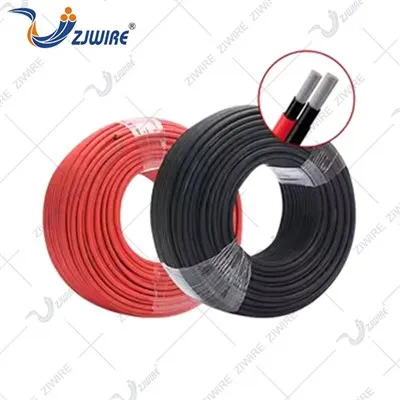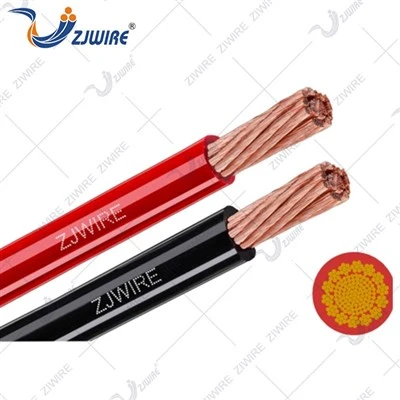
Hey there! As a supplier of Heat Resistant PVC Insulated Cables, I often get asked about the moisture absorption rate of the insulation material. It's a super important factor that can really affect how well these cables work, especially in different environments. So, let's dig into it and see what's what.
First off, what exactly is moisture absorption rate? Well, it's basically the amount of water that a material can absorb when it's exposed to a moist environment. For our Heat Resistant PVC Insulated Cables, this is a big deal because too much moisture can mess with the cable's electrical properties, its insulation performance, and even its lifespan.


Now, PVC (Polyvinyl Chloride) is a common insulation material we use in these cables. It's known for being pretty good at handling heat, but how does it fare when it comes to moisture? PVC has a relatively low moisture absorption rate compared to some other materials. Generally, the moisture absorption rate of PVC used in our cables is around 0.1% - 0.4% under normal conditions. That means for every 100 grams of PVC insulation, it'll absorb between 0.1 and 0.4 grams of water.
But why does this matter? When moisture gets into the insulation, it can create a conductive path. This is bad news because it can lead to electrical leakage, which not only wastes energy but can also be a safety hazard. Over time, the moisture can also cause the PVC to degrade, making the insulation less effective and increasing the risk of short - circuits.
Let's talk about the factors that can affect the moisture absorption rate of our Heat Resistant PVC Insulated Cables. One of the biggest factors is the environment. If the cables are installed in a place with high humidity, like a basement or a coastal area, they're going to be exposed to more moisture. And as you can imagine, the longer they're exposed, the more water they'll absorb.
Temperature also plays a role. Higher temperatures can actually increase the rate of moisture absorption. This is because heat can make the molecular structure of the PVC more porous, allowing water molecules to get in more easily. So, in a hot and humid environment, our cables might absorb moisture at a faster rate than in a cool and dry one.
The quality of the PVC itself is another factor. We make sure to use high - quality PVC in our cables. The better the quality, the more resistant it is to moisture absorption. We also add special additives to the PVC during the manufacturing process. These additives can help reduce the moisture absorption rate and improve the overall performance of the insulation.
Now, I want to mention a few of our popular cable products. We have the UL3321 Cable, which is great for applications where heat resistance is crucial. It's designed to handle high temperatures while still maintaining its low moisture absorption rate. Then there's the UL1015 Cable, a versatile option that's widely used in various electrical systems. And the UL2464 Cable is perfect for more demanding environments, with its excellent heat and moisture resistance.
To measure the moisture absorption rate of our cables, we use some pretty advanced testing methods. We'll expose samples of the cable insulation to a controlled humid environment for a set period of time. Then, we weigh the samples before and after the exposure. The difference in weight gives us the amount of moisture absorbed, and from that, we can calculate the moisture absorption rate.
We also conduct long - term testing to see how the cables perform over time. We'll install them in different real - world environments and monitor their moisture absorption and electrical performance. This helps us make sure that our cables meet the highest standards and can withstand the challenges of different applications.
If you're in the market for Heat Resistant PVC Insulated Cables, you're probably wondering how to choose the right ones based on the moisture absorption rate. Well, if you're installing the cables in a dry environment, you might not need to worry too much about a super - low moisture absorption rate. But if it's a humid or wet area, you'll want to go for cables with a lower rate.
Our team of experts is always here to help you make the right choice. We can look at your specific application, the environment where the cables will be installed, and your performance requirements. Then, we can recommend the best cable for your needs.
In conclusion, the moisture absorption rate of the insulation material in our Heat Resistant PVC Insulated Cables is a key factor that affects their performance and longevity. We take great care to ensure that our cables have a low moisture absorption rate through high - quality materials, advanced manufacturing processes, and rigorous testing. Whether you need cables for a small project or a large - scale industrial application, we've got you covered.
If you're interested in learning more about our Heat Resistant PVC Insulated Cables or want to start a procurement discussion, don't hesitate to reach out. We're eager to work with you and provide the best cable solutions for your business.
References:
- Textbooks on electrical cable engineering
- Industry research papers on PVC insulation properties