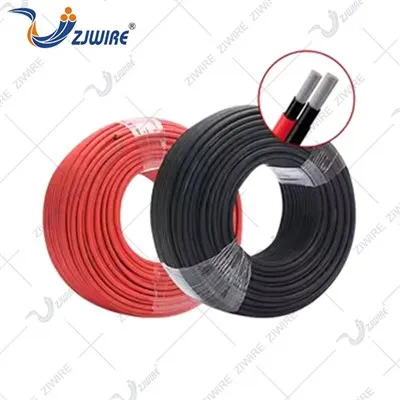
Hey there! As a plastic sheathed cable supplier, I often get asked about the relationship between the cross - sectional area and the current - carrying capacity of plastic sheathed cables. So, I thought I'd write this blog to share some insights on this topic.


First off, let's talk about what cross - sectional area means. The cross - sectional area of a cable is basically the area of the cable's cross - section, which is like a slice of the cable. It's usually measured in square millimeters (mm²). Now, why is this important? Well, the cross - sectional area of a cable has a direct impact on its current - carrying capacity.
The current - carrying capacity of a cable refers to the maximum amount of electric current that the cable can safely carry without overheating. Overheating can lead to all sorts of problems, like insulation damage, which can cause short circuits and even fires. So, getting the right current - carrying capacity is crucial for the safe and efficient operation of electrical systems.
So, how exactly does the cross - sectional area affect the current - carrying capacity? It's all about resistance. According to Ohm's Law (V = IR, where V is voltage, I is current, and R is resistance), for a given voltage, the current is inversely proportional to resistance. And the resistance of a cable is inversely proportional to its cross - sectional area. In simpler terms, a cable with a larger cross - sectional area has lower resistance.
When a cable has lower resistance, less energy is converted into heat when current flows through it. This means that a cable with a larger cross - sectional area can carry more current without overheating. For example, if you have two plastic sheathed cables, one with a small cross - sectional area and one with a large cross - sectional area, the cable with the large cross - sectional area can handle a higher current before it starts to get too hot.
Let's take a look at some real - world examples. In many electrical installations, different types of plastic sheathed cables are used depending on the current requirements. For instance, in a household electrical system, a smaller cross - sectional area cable might be used for lighting circuits, which typically carry lower currents. On the other hand, larger cross - sectional area cables are used for high - power appliances like electric stoves or air conditioners.
Now, there are also some industry standards and regulations that take into account the relationship between cross - sectional area and current - carrying capacity. For example, standards like UL2587 Cable UL2587 Cable, UL3266 Cable UL3266 Cable, and UL10276 Cable UL10276 Cable specify the current - carrying capacities for different cross - sectional areas of plastic sheathed cables. These standards ensure that cables are used safely and effectively in various applications.
However, it's not just the cross - sectional area that affects the current - carrying capacity. Other factors also come into play. The type of insulation material used in the cable can have an impact. Some insulation materials have better heat - resistant properties than others, which means they can withstand higher temperatures without degrading. The ambient temperature of the environment where the cable is installed is also important. If the cable is in a hot environment, it will have a lower current - carrying capacity because it's already starting at a higher temperature.
The installation method can also matter. Cables that are installed in conduits or bundled together may have a lower current - carrying capacity compared to cables that are installed in open air. This is because the heat dissipation is more difficult when cables are grouped together.
As a plastic sheathed cable supplier, I always make sure to provide customers with accurate information about the cross - sectional area and current - carrying capacity of our cables. We have a wide range of cables with different cross - sectional areas to meet the diverse needs of our customers. Whether you're working on a small residential project or a large industrial installation, we can help you find the right cable for your application.
If you're in the market for plastic sheathed cables and need to understand more about the relationship between cross - sectional area and current - carrying capacity, don't hesitate to reach out. We're here to assist you in making the best choice for your electrical needs. Whether you have questions about specific cable types, installation requirements, or just want some general advice, our team of experts is ready to help.
In conclusion, the cross - sectional area of a plastic sheathed cable is a key factor in determining its current - carrying capacity. But it's also important to consider other factors like insulation material, ambient temperature, and installation method. By understanding these relationships, you can ensure that you're using the right cable for your electrical system, which will help keep it safe and running smoothly.
If you're interested in purchasing plastic sheathed cables or need more information, feel free to contact us. We'll be happy to discuss your requirements and provide you with a customized solution.