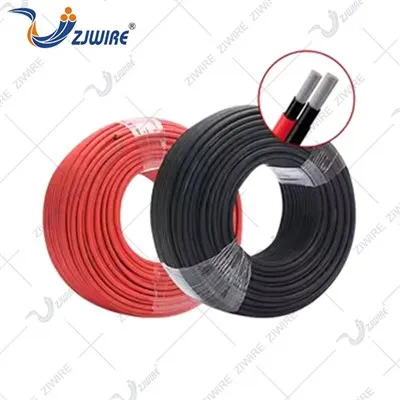
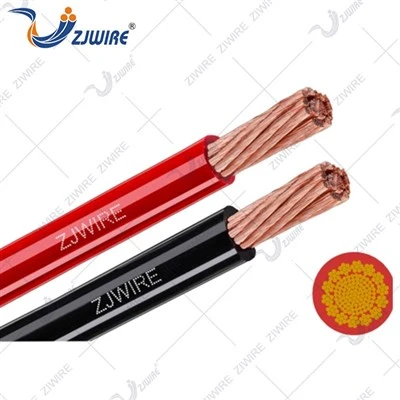
In the realm of control circuits, understanding the response time of parallel twin wire is crucial for ensuring the efficient and reliable operation of various electrical systems. As a supplier of parallel twin wire, I have witnessed firsthand the importance of this parameter in different applications. In this blog post, I will delve into the concept of response time, explore the factors that influence it, and discuss its significance in control circuits.
What is Response Time?
Response time refers to the time it takes for a system to react to a change in input. In the context of parallel twin wire in control circuits, it is the time between the application of a signal at one end of the wire and the appearance of the corresponding response at the other end. This time interval is influenced by several factors, including the electrical properties of the wire, the length of the wire, and the nature of the signal being transmitted.
Factors Affecting Response Time
Electrical Properties of the Wire
The electrical properties of the parallel twin wire, such as resistance, capacitance, and inductance, play a significant role in determining its response time. Resistance causes a voltage drop along the wire, which can slow down the signal propagation. Capacitance and inductance, on the other hand, can store and release electrical energy, leading to delays in the signal transmission.
For example, a wire with high resistance will have a longer response time because more energy is dissipated as heat, reducing the speed of the signal. Similarly, a wire with high capacitance or inductance will take longer to charge and discharge, resulting in a slower response.
Length of the Wire
The length of the parallel twin wire also has a direct impact on its response time. As the length of the wire increases, the signal has to travel a greater distance, which takes more time. This is known as the propagation delay.
In addition, longer wires are more susceptible to interference and signal degradation, which can further increase the response time. Therefore, it is important to choose the appropriate wire length based on the specific requirements of the control circuit.
Nature of the Signal
The nature of the signal being transmitted through the parallel twin wire can also affect its response time. For instance, a high-frequency signal will generally have a shorter response time than a low-frequency signal because it can travel faster through the wire.
Moreover, the shape and amplitude of the signal can also influence the response time. A sharp-edged signal, for example, may require more time to propagate through the wire compared to a smooth, sinusoidal signal.


Significance of Response Time in Control Circuits
The response time of parallel twin wire is of utmost importance in control circuits because it directly affects the performance and reliability of the system. In applications where quick and accurate responses are required, such as in industrial automation and robotics, a long response time can lead to delays, errors, and even system failures.
For example, in a robotic arm control system, a delay in the signal transmission through the parallel twin wire can cause the arm to move slower than expected or miss its target. This can result in reduced productivity, increased downtime, and potential safety hazards.
On the other hand, a short response time ensures that the control signals are transmitted quickly and accurately, allowing the system to respond promptly to changes in the input. This improves the overall efficiency and performance of the control circuit, leading to better productivity and reduced costs.
Our Parallel Twin Wire Solutions
As a supplier of parallel twin wire, we offer a wide range of products that are designed to meet the diverse needs of our customers. Our wires are made from high-quality materials and are manufactured using advanced techniques to ensure excellent electrical properties and low response times.
We offer different types of parallel twin wire, including UL1284 Cable, UL3132 Cable, and NM Cable, which are suitable for various control circuit applications. These cables are UL-listed, which means they meet the strict safety and performance standards set by Underwriters Laboratories.
In addition to our standard products, we also offer custom solutions to meet the specific requirements of our customers. Our team of experts can work with you to design and manufacture parallel twin wire that is tailored to your exact needs, ensuring optimal performance and reliability in your control circuits.
Contact Us for Procurement
If you are looking for high-quality parallel twin wire with short response times for your control circuits, we would be happy to assist you. Our experienced sales team can provide you with detailed information about our products, help you choose the right wire for your application, and offer competitive pricing.
Whether you are a small business or a large corporation, we are committed to providing you with the best products and services. Contact us today to start a procurement discussion and take your control circuit performance to the next level.
References
- Grob, Bernard. "Basic Electronics." McGraw-Hill Education, 2007.
- Boylestad, Robert L., and Nashelsky, Louis. "Electronic Devices and Circuit Theory." Pearson, 2018.
- Hayt, William H., and Kemmerly, Jack E. "Engineering Circuit Analysis." McGraw-Hill Education, 2012.