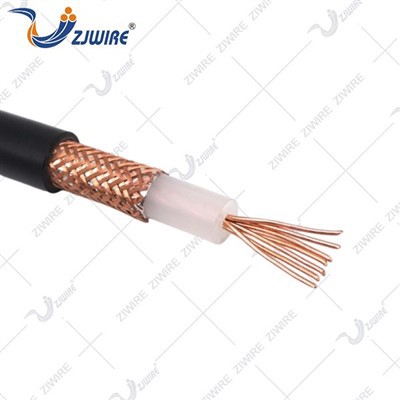
The recent fluctuations in the metal market have been as tumultuous as a surging river, with one wave following another. On January 20, 2026, the spot price of copper on the Yangtze River was 100,615 yuan per ton, while A00 aluminum slightly dropped to 23,685 yuan per ton. For business owners in the wind power and photovoltaic sectors, this is almost like a "life and death equation" for their enterprises, with raw material costs becoming the dividing line between winners and losers. Under the backdrop of such drastic price changes, the copper used in cables, which was previously overlooked, has become a time bomb in business decisions.
China is rich in aluminum resources, but copper is a scarce commodity. After the continuous rise in copper prices, "aluminum substitution for copper" has shifted from theoretical discussions to a real battlefield in the industry. The change in technical routes is not merely about replacing copper wires with aluminum ones. For instance, the environment inside wind turbine towers is special, with exposure to sunlight, salt spray, and rain. However, the cables inside the towers are basically stationary. After years of market refinement, weather-resistant aluminum alloy cables have become a standard configuration. The real challenge does not lie in the cables themselves but in the connection details - dedicated transition terminals, high-strength crimping techniques, and anti-oxidation treatments, each of which is crucial.
The most challenging area is the torsion cables in the nacelle of wind turbines. The nacelle rotates continuously, and the connection points are twisted thousands of times. Previously, only copper wires were used because of their durability. Now, for aluminum to catch up, the industry no longer relies on some super-strong aluminum alloy but instead designs the overall structure to compensate for the material's shortcomings, much like organizing a special forces team with clear divisions of labor for the conductors and resistance layers. This approach has been widely adopted in some medium-sized wind farms both domestically and internationally in the past three years. A wind power project in Oklahoma, USA, was the first to use an independently developed aluminum system in 2022, significantly reducing the weight and procurement costs of cables.
Solar DC sides and deep-sea cable laying are two other testing grounds. High-voltage DC power generation requires stable and reliable lines, making lightweight aluminum a promising exploration direction. For example, the new photovoltaic base in Dezhou, Shandong Province, has been trying to replace some lines with aluminum cables since 2023 to control costs and enhance sustainability. On the other hand, deep-sea cables are highly sensitive to weight. When laying deep-sea communication cables in the North Sea oilfield of the UK, various aluminum materials were tested to reduce self-weight and maintenance costs, achieving certain results.


The industry's attitude towards aluminum cables is not uniform. A well-established wind turbine manufacturer once attempted a full switch to aluminum alloy torsion solutions but suffered heavy losses due to inadequate anti-corrosion measures at the connection points, missing out on the industry's boom. This negative case serves as a reminder to all players that relying solely on the initial material cost advantage is far from enough. To make the accounts look good, the entire life cycle's installation and maintenance costs must be considered.
More subtle interest chains are also quietly shifting. If the supply chain can vertically integrate the cable and connector businesses, control over profit margins will undoubtedly be stronger. For instance, a leading cable manufacturer in Jiangsu Province recently acquired a professional terminal manufacturer, directly advancing profits and significantly improving supply efficiency. Moreover, as the warranty periods of wind farms expire one after another, the company whose aluminum cables can withstand continuous operation for more than five years may be the next to seize the market replacement opportunity. Otherwise, if industry confidence collapses, the popularization of new materials will be delayed by another three years.
It is certain that next year will be a watershed for verifying the reliability of aluminum materials. From product design, system integration to on-site construction and even customer feedback, all will be criteria for judgment. This one-year window period is like a race against time, with both technical experts and procurement managers waiting for the emergence of a "leader".

One-stop Wire and Cable Factory in China
Please send us your inquiries regarding wires and cables. We are dedicated to serving you and will help unlock new growth and success opportunities for your electrical wire and cable business.