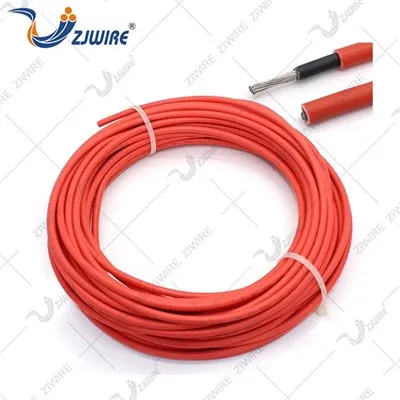
Designing a signal transmission wire for space applications is a complex and challenging task that requires a deep understanding of the unique environment of space and the specific requirements of signal transmission. As a signal transmission wire supplier, we have extensive experience in developing high - performance wires for space - related projects. In this blog, we will explore the key factors and steps involved in designing a signal transmission wire for space applications.
Understanding the Space Environment
The space environment is extremely harsh and different from the terrestrial environment. It is characterized by factors such as radiation, extreme temperatures, vacuum, and micrometeoroid impacts.
Radiation in space comes from various sources, including solar flares and cosmic rays. High - energy particles can cause damage to the wire's insulation and conductors, leading to signal degradation or even complete failure. For example, ionizing radiation can break chemical bonds in the insulation material, reducing its dielectric properties and increasing the risk of electrical breakdown.
Extreme temperatures in space can range from extremely cold in the shadow of a spacecraft to very hot when exposed to direct sunlight. These temperature variations can cause thermal expansion and contraction of the wire materials, which may lead to mechanical stress, cracking, and ultimately, failure.
The vacuum in space means there is no air to conduct heat away from the wire. This can cause heat to build up in the wire, especially if it is carrying a significant amount of current. Additionally, outgassing can occur in a vacuum, where volatile substances in the wire materials are released. These released substances can contaminate sensitive equipment on the spacecraft.
Micrometeoroid impacts are a constant threat in space. Small particles traveling at high speeds can puncture the wire, damaging the conductors and insulation. This can disrupt signal transmission and pose a serious risk to the overall functionality of the spacecraft.
Selecting the Right Materials
Given the harsh space environment, choosing the appropriate materials for the signal transmission wire is crucial.
Conductors
Copper is a commonly used conductor material due to its high electrical conductivity. However, in space applications, copper may need to be coated or alloyed to improve its resistance to radiation and corrosion. For example, copper - nickel alloys can offer better radiation resistance compared to pure copper. Aluminum is also an option as it is lightweight, which is an important consideration for space applications where weight is a critical factor. But it has lower conductivity than copper, so the wire may need to be larger in cross - section to achieve the same level of performance.
Insulation
The insulation material must be able to withstand radiation, extreme temperatures, and vacuum. Polyimide is a popular choice for space wire insulation. It has excellent thermal stability, radiation resistance, and low outgassing properties. Teflon (PTFE) is another option known for its high dielectric strength and chemical resistance. It can also maintain its properties over a wide range of temperatures.


Shielding
Shielding is essential to protect the wire from electromagnetic interference (EMI) and radio - frequency interference (RFI). A common shielding material is braided copper, which provides good electrical conductivity and flexibility. For more demanding applications, multiple layers of shielding may be used, including foil shields in addition to braided shields.
Design Considerations for Signal Transmission
Signal Integrity
Maintaining signal integrity is of utmost importance in space applications. The wire should have low attenuation, which means that the signal strength should not decrease significantly over the length of the wire. This requires careful design of the wire's cross - section and impedance matching. Impedance matching ensures that the signal travels smoothly through the wire without reflections, which can cause signal distortion.
Bandwidth
The bandwidth of the wire determines the range of frequencies that can be transmitted. In space applications, where high - speed data transmission is often required, a wire with a wide bandwidth is necessary. This can be achieved by optimizing the wire's design, such as using a larger conductor diameter and a proper insulation thickness.
Power Handling
The wire must be able to handle the power requirements of the signal transmission system. This involves considering factors such as the maximum current that the wire can carry without overheating. In space, where heat dissipation is a challenge, it is important to select a wire with a sufficient power - handling capacity.
Manufacturing and Testing
Manufacturing Processes
The manufacturing of signal transmission wires for space applications requires precise and controlled processes. Extrusion is a common process used to apply the insulation to the conductor. During extrusion, the insulation material is melted and then applied uniformly around the conductor. The braiding process is used to create the shielding layer, where thin copper wires are woven around the insulated conductor.
Testing
Once the wire is manufactured, it undergoes a series of rigorous tests to ensure its performance and reliability in the space environment. These tests include radiation testing, where the wire is exposed to high - energy radiation to simulate the space radiation environment. Thermal cycling tests are also conducted to evaluate the wire's performance under extreme temperature variations. Additionally, electrical tests are performed to measure the wire's impedance, attenuation, and other electrical properties.
Our Product Offerings
As a signal transmission wire supplier, we offer a range of products suitable for space applications. Our LIHCH Cable is designed with high - quality materials and advanced manufacturing processes to ensure reliable signal transmission in the harsh space environment. It has excellent radiation resistance and low attenuation, making it ideal for long - distance signal transmission in space.
Our Feed Line is another product that is well - suited for space applications. It is designed to handle high - power signals and has a wide bandwidth, which is essential for high - speed data transmission in space.
The SYV 50 9 RF Coaxial Cable is a high - performance coaxial cable that provides excellent shielding against EMI and RFI. It is commonly used in space communication systems to ensure clear and reliable signal transmission.
Contact for Procurement
If you are in need of signal transmission wires for your space applications, we are here to help. Our team of experts can work with you to understand your specific requirements and provide the best solutions. Whether you need a custom - designed wire or one of our standard products, we have the capabilities to meet your needs. Contact us to start a procurement discussion and take the first step towards reliable signal transmission in space.