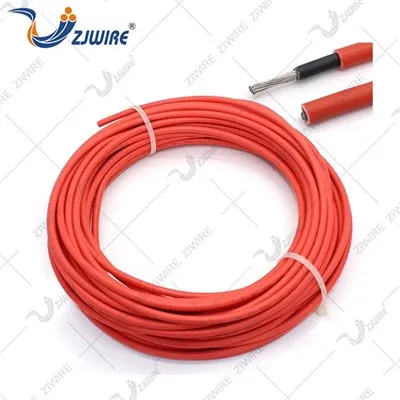
Hey there! As a supplier of double sheathed cables, I often get asked about signal attenuation in data transmission. It's a super important topic, especially in today's tech - crazy world where data transfer is happening at lightning speed. So, let's dive right in and explore what signal attenuation of double sheathed cable in data transmission really means.
First off, what's signal attenuation? Well, it's basically the reduction in the strength of a signal as it travels through a medium. In the case of double sheathed cables, this medium is the cable itself. When we send data through these cables, the signal starts off strong, but as it moves along the cable, it loses some of its power. This can be a real headache because a weakened signal can lead to data errors, slower transmission speeds, and overall poor performance.
There are a few factors that cause signal attenuation in double sheathed cables. One of the main culprits is resistance. Just like in any electrical circuit, the cable has resistance. As the signal travels through the cable, it has to overcome this resistance, and in the process, some of its energy is lost. The longer the cable, the more resistance the signal has to deal with, and the greater the attenuation.
Another factor is capacitance. Double sheathed cables have capacitance, which is the ability to store electrical energy. When a signal passes through the cable, the capacitance can cause a part of the signal to be stored rather than transmitted forward. This results in a loss of signal strength.
Frequency also plays a big role. Higher - frequency signals tend to experience more attenuation than lower - frequency ones. In data transmission, we often deal with high - frequency signals because they can carry more data. But this comes at a cost, as these high - frequency signals are more prone to attenuation.
Now, let's talk about how double sheathed cables are designed to deal with signal attenuation. The double sheath is a key feature here. The outer sheath provides protection against physical damage, moisture, and electromagnetic interference (EMI). EMI can cause a lot of problems in data transmission, as it can introduce noise into the signal and increase attenuation. The inner sheath further enhances the cable's performance by providing additional insulation and reducing the impact of external factors on the signal.
But even with the double sheath, signal attenuation is still a concern. That's why we, as cable suppliers, are constantly working on improving the design and materials of our double sheathed cables. We use high - quality conductors with low resistance to minimize the energy loss due to resistance. We also carefully select insulation materials with low capacitance to reduce the signal storage effect.
Let's take a look at some other types of cables that are also used in data transmission and how they compare in terms of signal attenuation. For example, the TW Cable is a popular choice in many applications. It has its own characteristics when it comes to signal attenuation. TW cables are often used in low - voltage applications, and they can have different levels of attenuation depending on their construction and the frequency of the signal.
The UL1283 Cable is another option. It's designed to meet certain safety and performance standards. In terms of signal attenuation, it has its own set of advantages and limitations. The construction of the UL1283 cable affects how the signal travels through it and how much attenuation it experiences.
Then there's the XHHW - 2 Cable. This cable is known for its durability and resistance to environmental factors. When it comes to signal attenuation, it has a different profile compared to double sheathed cables. The materials and design of the XHHW - 2 cable influence how the signal is transmitted and how much strength it loses along the way.
As a supplier, we understand that customers are looking for cables that can minimize signal attenuation and provide reliable data transmission. That's why we offer a wide range of double sheathed cables with different specifications to meet various needs. Whether you're setting up a small home network or a large - scale data center, we have the right cable for you.
If you're in the market for double sheathed cables, or if you have any questions about signal attenuation or data transmission, don't hesitate to reach out. We're here to help you make the best choice for your specific requirements. We can provide you with detailed information about our products, their performance, and how they can fit into your data transmission setup.
In conclusion, signal attenuation is a crucial aspect of data transmission when using double sheathed cables. While it's an inevitable phenomenon, we're constantly working to minimize its impact. By understanding the factors that cause attenuation and choosing the right cable for your needs, you can ensure smooth and efficient data transmission. So, if you're ready to take your data transmission to the next level, get in touch with us. We're eager to assist you in finding the perfect double sheathed cable for your project.


References:
- Electrical Engineering textbooks on cable design and signal transmission
- Industry reports on data cable performance and attenuation