


As a supplier of plastic insulated copper wire, I understand the critical importance of testing the conductivity of our products. Conductivity is a fundamental property that determines the efficiency and reliability of electrical wiring. In this blog post, I will share some methods and considerations for testing the conductivity of plastic insulated copper wire.
Understanding Conductivity
Conductivity is a measure of a material's ability to conduct an electric current. In the case of plastic insulated copper wire, the copper core is the conductor, while the plastic insulation serves to protect the wire and prevent electrical leakage. The conductivity of copper is extremely high, which makes it an ideal material for electrical wiring. However, several factors can affect the conductivity of the wire, including the purity of the copper, the cross - sectional area of the wire, and the presence of any contaminants or defects.
Methods for Testing Conductivity
1. Four - Point Probe Method
The four - point probe method is a widely used technique for measuring the conductivity of materials. This method involves applying a known current through two outer probes and measuring the voltage across two inner probes. The advantage of the four - point probe method is that it eliminates the resistance of the contact points between the probes and the wire, providing a more accurate measurement of the wire's conductivity.
To perform the four - point probe test on plastic insulated copper wire, the insulation must first be removed from a small section of the wire. The four probes are then placed in contact with the exposed copper core. A constant current is applied through the outer probes, and the voltage across the inner probes is measured. The conductivity can then be calculated using Ohm's law ((R=\frac{V}{I})) and the known dimensions of the wire.
2. Two - Point Probe Method
The two - point probe method is a simpler and more straightforward technique for measuring conductivity. In this method, a voltage is applied across two points on the wire, and the resulting current is measured. The resistance of the wire can then be calculated using Ohm's law, and the conductivity can be determined from the resistance and the dimensions of the wire.
However, the two - point probe method has some limitations. The resistance of the contact points between the probes and the wire can introduce errors into the measurement. Additionally, the method may not be suitable for measuring the conductivity of very short or thin wires.

3. Using a Multimeter
A multimeter is a versatile tool that can be used to measure the resistance of a wire, which is inversely proportional to its conductivity. To measure the resistance of a plastic insulated copper wire using a multimeter, the insulation must be removed from both ends of the wire. The multimeter is then set to the resistance measurement mode, and the probes are connected to the exposed copper ends of the wire. The resistance value displayed on the multimeter can be used to calculate the conductivity of the wire.
Considerations for Testing
When testing the conductivity of plastic insulated copper wire, there are several important considerations to keep in mind:
1. Temperature
The conductivity of copper is temperature - dependent. As the temperature increases, the resistance of the copper wire also increases, which means that the conductivity decreases. Therefore, it is important to measure the conductivity at a known and stable temperature. In most cases, the conductivity is measured at a standard temperature of 20°C.
2. Sample Preparation
Proper sample preparation is crucial for accurate conductivity testing. The insulation must be removed carefully to avoid damaging the copper core. Any contaminants or oxidation on the surface of the copper can also affect the conductivity measurement, so the wire should be cleaned before testing.
3. Wire Dimensions
The conductivity of a wire is also affected by its cross - sectional area and length. To ensure accurate measurements, the dimensions of the wire should be measured precisely. The cross - sectional area can be calculated from the diameter of the wire, which can be measured using a micrometer.
Applications of Conductivity Testing
Conductivity testing is essential for ensuring the quality and performance of plastic insulated copper wire. In the electrical industry, high - quality wiring is crucial for the safe and efficient operation of electrical systems. By testing the conductivity of our wires, we can ensure that they meet the required standards and specifications.
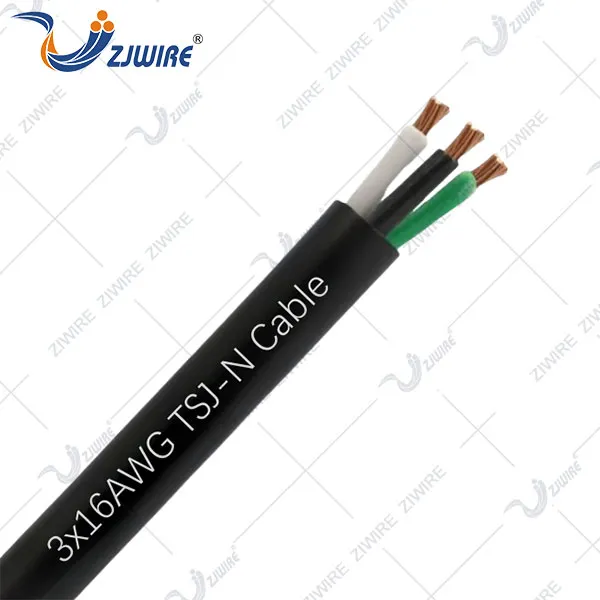
For example, in the case of UL1330 Cable, which is commonly used in power distribution systems, accurate conductivity testing is necessary to ensure that the cable can carry the required electrical current without overheating or causing other problems. Similarly, THHW Cable and TSJ Cable are used in various electrical applications, and conductivity testing is an important part of the quality control process.
Conclusion
Testing the conductivity of plastic insulated copper wire is a critical step in ensuring the quality and performance of our products. By using appropriate testing methods and considering important factors such as temperature, sample preparation, and wire dimensions, we can obtain accurate conductivity measurements. This helps us to provide high - quality wires that meet the needs of our customers in various electrical applications.
If you are interested in purchasing plastic insulated copper wire or have any questions about our products, please feel free to contact us for further discussion. We are committed to providing the best products and services to meet your requirements.


